A live master class with Joshua Hoo
For Doctors, Lawyers, professionals & Business Owners
What if the biggest risk to your financial future isn't a bad investment — but the years of doing nothing while your capital quietly loses purchasing power inside a default financial planner portfolio?
Join this free 90-minute training and discover the D.E.A.L.S. framework: a repeatable, 5-filter scoring system that replaces gut feelings and "I'll deal with it next quarter" with instant clarity on any deal that crosses your desk.
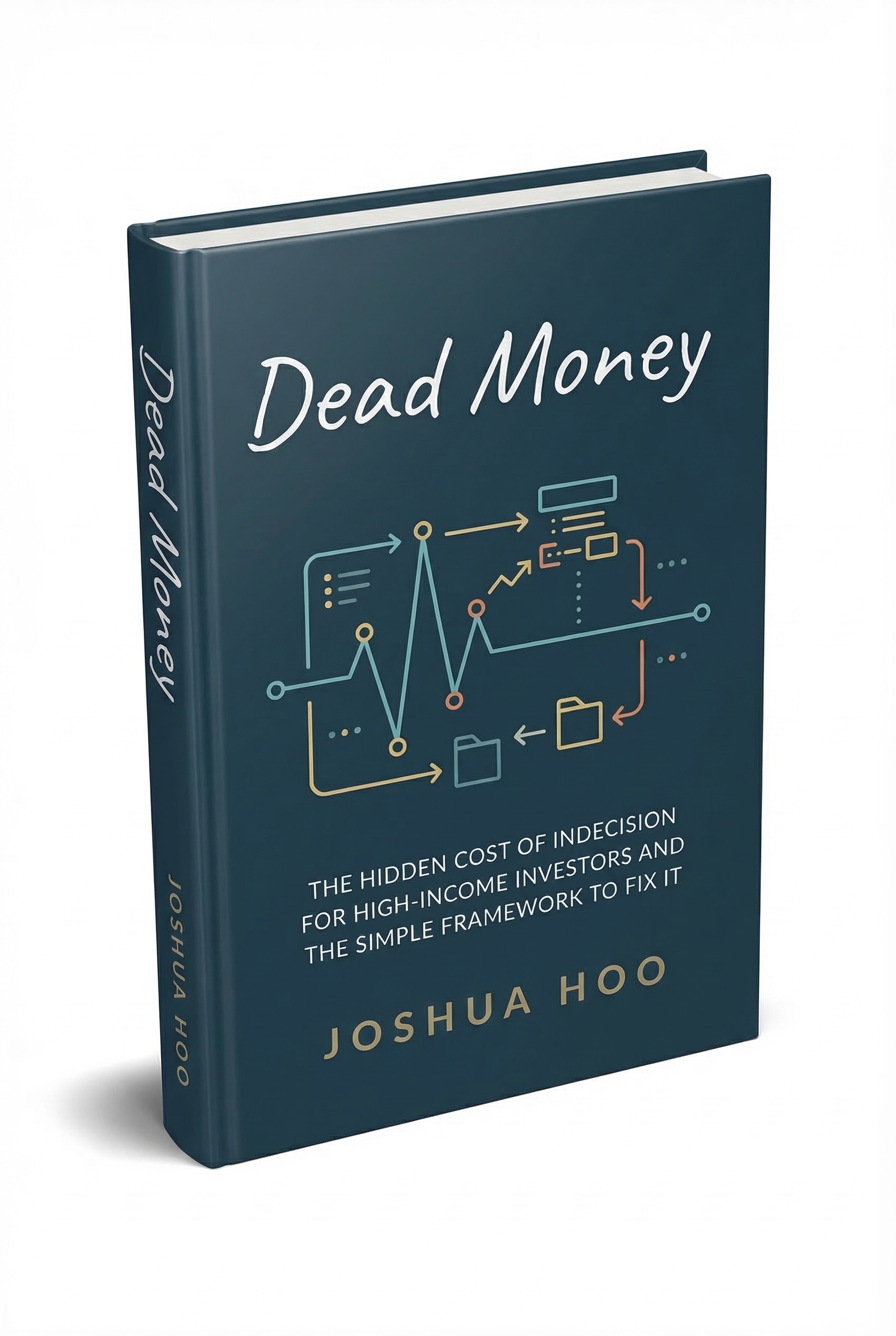
Stay until the end and receive a FREE digital copy of the Dead Money book — the complete framework, real-world case studies, and printable scorecards you can use that same night.
When: Thursday, Apr 23, 2026 at 3:00pm EST
Duration: ~90 Minutes
Cost: Complimentary
Bonus: FREE copy of the Dead Money book for every attendee who stays to the end
Your information is secure. We respect your time and your inbox.
When: Thursday, Apr 16, 2026 at 3:00pm EST
Duration: ~90 Minutes
Cost: Complimentary
Bonus: FREE digital copy of the Dead Money book when you stay to the end
By registering, you agree to receive email and reminder text from Goodland Wealth related to this free training. You can unsubscribe at any time.
In this short video, Joshua Hoo explains why he wrote Dead Money, what the D.E.A.L.S. framework is, and exactly what you'll walk away with from this free master class — including your complimentary copy of the book.
Here's a number that should bother you.
Take $100,000. Park it inside a default financial planner portfolio earning 4% — which is generous for most standard allocations. Leave it alone for 30 years. At the end, you have about $324,000. Your money tripled. Feels fine.
Now take the same $100,000 and deploy it at 12% per year. Same time horizon. Same starting capital. Thirty years later, you have roughly $3 million.
That's not a gap. That's a $2.7 million difference — on one hundred thousand dollars. And it doesn't grow in a straight line. It accelerates. At ten years, it's noticeable. At twenty, it's serious. At thirty, it's the difference between comfortable and transformative.
And your actual number is almost certainly bigger than $100,000.
Say you have $500,000 sitting in low-performing capital averaging 4.5%. In 20 years, that becomes roughly $1.93 million. At 11%, that same $500,000 becomes approximately $6.4 million. The gap? $4.5 million. That is your "dead money" number. That is what sitting still is costing you.
Yet here you are — spending 50 to 70 hours a week being world-class at your profession. Your RRSP sits in the same mutual funds your bank picked years ago. Your TFSA has contribution room you haven't used. Your professional corporation has hundreds of thousands in retained earnings parked in a vehicle that's quietly losing purchasing power.
You're not bad with money. You're too busy to deal with it. And every quarter you tell yourself "I'll deal with it next quarter," the compounding gap gets wider. Not linearly. Exponentially.
The cost of a bad investment is recoverable. You learn from it, you adjust, you deploy again. The cost of years of dead money is not. Those compounding years are gone. The math does not offer a do-over.
That's what Dead Money — the book — calls "the silent wealth killer hiding in your portfolio." And once you see the real number, you can't unsee it.
This isn't a dry lecture or a product pitch disguised as education. In 90 minutes, you'll walk away with a complete system for evaluating any investment opportunity — whether it comes from your bank, a colleague, or a channel you've never explored before.
Here's a preview of what we're covering:
The "Backward Math" exercise that changes everything. You'll calculate — in sixty seconds, live — the exact compound annual return you need to get from where you are to where you need to be. Then you'll compare it to what your money is actually doing. When those two numbers sit side by side, your definition of "safe" permanently changes.
The Dead Money Audit. A simple 4-step exercise from the book that takes less than thirty minutes and shows you the specific dollar cost of your current allocation — not in theory, but in your own numbers, with your own capital. Most attendees discover a gap measured in millions they never knew existed.
Why high earners are the most underserved investors in North America. The financial industry doesn't ignore you — it drowns you in products, platforms, and advisors. But almost none of it is designed to solve the one problem that matters: deploying meaningful capital into investments that produce real, above-market returns without requiring you to become a full-time financial expert.
The Four Traps that keep smart people stuck. Straight from Chapter 2 of the book — the invisible patterns that turn a massive income into an illusion of progress. (This has nothing to do with spending habits.)
The D.E.A.L.S. scorecard — a 5-letter, 5-filter evaluation system. Decode the math. Evaluate the deal. Assess the operator. Locate the risks. Spread your capital. Five questions that give you a clear answer on any opportunity: pass, fail, or need more information. No spreadsheets. No financial jargon. No weekend research projects. And it's asset-class agnostic — it works for real estate, private equity, venture capital, or any deal outside the public markets.
The illiquidity advantage. The counterintuitive reason why locking your capital up for a defined period can actually pay you more — and why, for someone who isn't touching that money anyway, the "downside" costs you absolutely nothing.
The "Two Investor Paths" comparison. Investor A deploys $500K based on a compelling pitch, no system, no scoring — and spends five years locked into a position that barely covers inflation. Investor B uses the DEALS scorecard across multiple deals — and builds a diversified, compounding portfolio. You'll see the actual side-by-side breakdown and understand exactly what separates them.
How to pass "the dinner table test." So the next time your spouse asks "How are we doing with our investments?" you can answer with confidence, clarity, and a framework — instead of guilt.
A step-by-step path from "stuck and uncertain" to "confident and deployed." The 4-step process that turns dead money into a compounding wealth engine you never have to babysit. Within 90 days, you'll be evaluating real opportunities. Within six months, your capital could be deployed. Within a year, you're no longer the person who feels stuck.
And when you stay to the end, you receive a FREE digital copy of the Dead Money book — with the complete DEALS framework, all the case studies, the Dead Money Audit worksheet, the Stuck Investor Self-Assessment, and the actual printable scorecards so you can evaluate any opportunity that crosses your desk. That night.

"I've been where you are — high income, limited time, and a portfolio that wasn't pulling its weight."
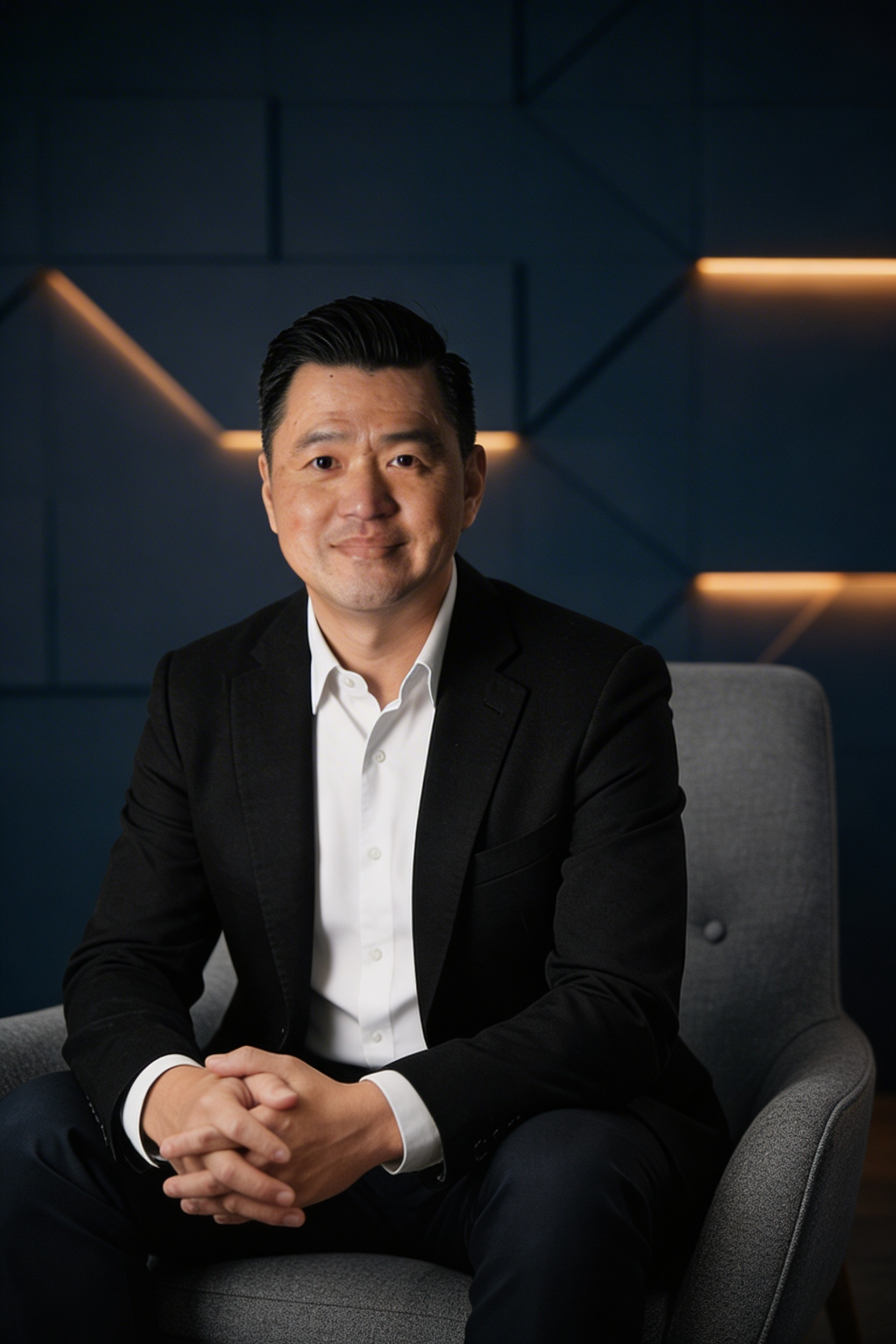
Joshua Hoo isn't a real estate guru who's never built anything.
He's someone who spent years in the markets — forex, options, hedge funds — before discovering something that changed everything: the less time he spent managing his money, the better it actually performed.
Joshua started his career inside a real estate development firm — not as an investor on the sidelines, but in the machine. Six years of project management, land acquisition, construction oversight, bank financing, and sales. He learned how the entire development cycle worked from raw land to finished product. Then he went back to school, entered the financial markets, and spent years chasing complexity — a value investing fund, leveraged forex, options strategies. By the time he closed his hedge fund, he was exhausted. Not physically. Mentally.
The answer wasn't a more sophisticated system. It was going back to the asset class he understood deeply and building a disciplined, repeatable framework around it.
Over the past 25 years, Joshua has personally evaluated hundreds of investment opportunities across multiple asset classes — stocks, bonds, real estate, private equity, and alternatives. Through all of that, he's built a portfolio of private investments that generates passive income without day-to-day management.
The results speak for themselves:
Joshua currently leads four businesses across four countries — a medical devices company in Taiwan, an AI-powered investment research platform in the US, a residential and hotel developer in New Zealand, and a private equity firm in Canada.
Why does he teach this?
"The biggest risk most high-income professionals face right now isn't a bad deal. It's decades of dead money sitting in their portfolio, compounding at a rate that will never get them where they need to go. I wrote the book and built this master class to fix that."
In this free master class, you'll walk away with:
Plus — stay to the end and receive your FREE bonus:
A digital copy of Dead Money: The Hidden Cost of Indecision for High-Income Investors and the Simple Framework to Fix It. The complete DEALS framework. Ten chapters. Real-world case studies. The Dead Money Audit worksheet. The Stuck Investor Self-Assessment. Printable scorecards. Yours to keep whether you take another step or not.
Spots are limited to ensure a quality experience.
Spots are limited to ensure a quality experience. Register now to secure your place — and stay to the end to receive your free copy of the Dead Money book.
By registering, you agree to receive email and reminder text from Goodland Wealth related to this free training. You can unsubscribe at any time.
©2026 Goodland Wealth Inc. All rights reserved.